The Super Cruiser division has popped up in the last few years to provide a playground for the bigger, heavier cruiser racers. Those that probably rate the same as a smaller race boat but struggle to get a result in all but the narrowest of weather windows. The smaller lighter boats keep moving in light air when the heavier boats get stuck. When the wind picks up, the lighter boats get up and plane down wind. Only when it is a moderate reaching race, when waterline length is king, do the super cruisers stand a chance. These conditions also favour canting keel boats. We just can’t win, or at least it is very hard. A gap really starts to open up at around the 50 foot mark.The boats are big enough for there to be enough room to employ very different design concepts, even within the cruiser race ethos.
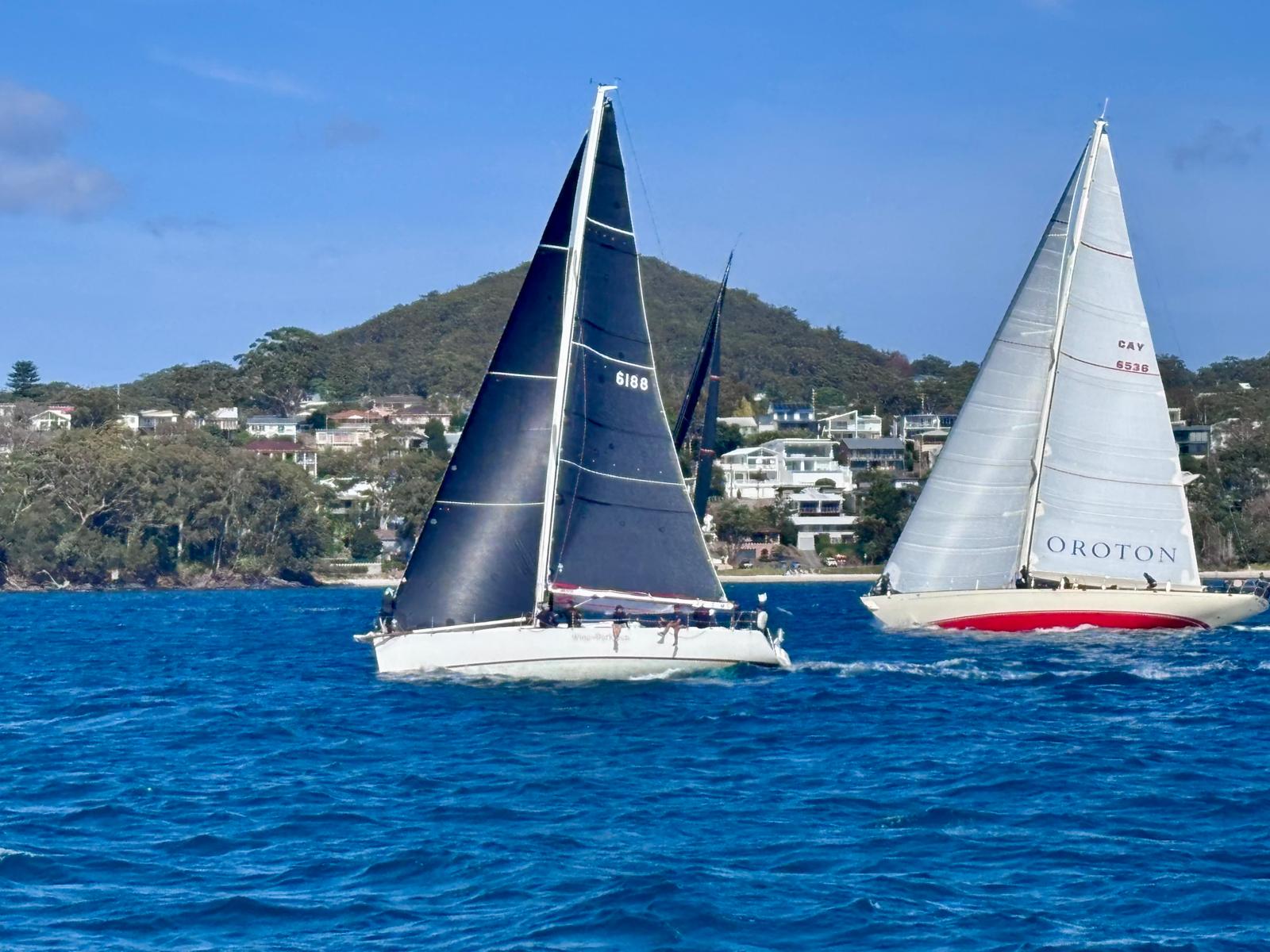
So the Super Cruiser Racer division was born. Championed by Walter Carpenter, owner of the beautiful Marten 67, the Super cruiser racer employs a range of measures to keep the race boats away. Depending on the regatta there is usually a minimum length between 13.5m (RSHYR) and 52 foot (Port Stephens) as well as a minimum DLR (Displacement to length ratio) or maximum IRC Hull factor. RSHYR also required a full galley, enclosed heads and cabins for 50% of the race crew. Thankfully there has also been some leniency in applying the restrictions to ensure that any boat following the ethos of the class can compete. I have been trying to talk to competitors and organisers to get a consistent criteria so that we all know we can bring our boats to a regatta and race against a similar fleet without being lumped back in with lightweight race boats.
To the regatta
Courtney has filled you in on the prep and delivery. Her decision to sit the out regatta looked to be a good one on the first day as we sat under an AP for about half an hour. We finally got away in a 6-8knot shifty northerly with a healthy run out tide to push us out to the islands that were our marks for the day. Like the northern regattas, the courses are chosen as much for tide as wind. If the tide is going out, guess where the course is, off shore. Tide coming in, up the bay.
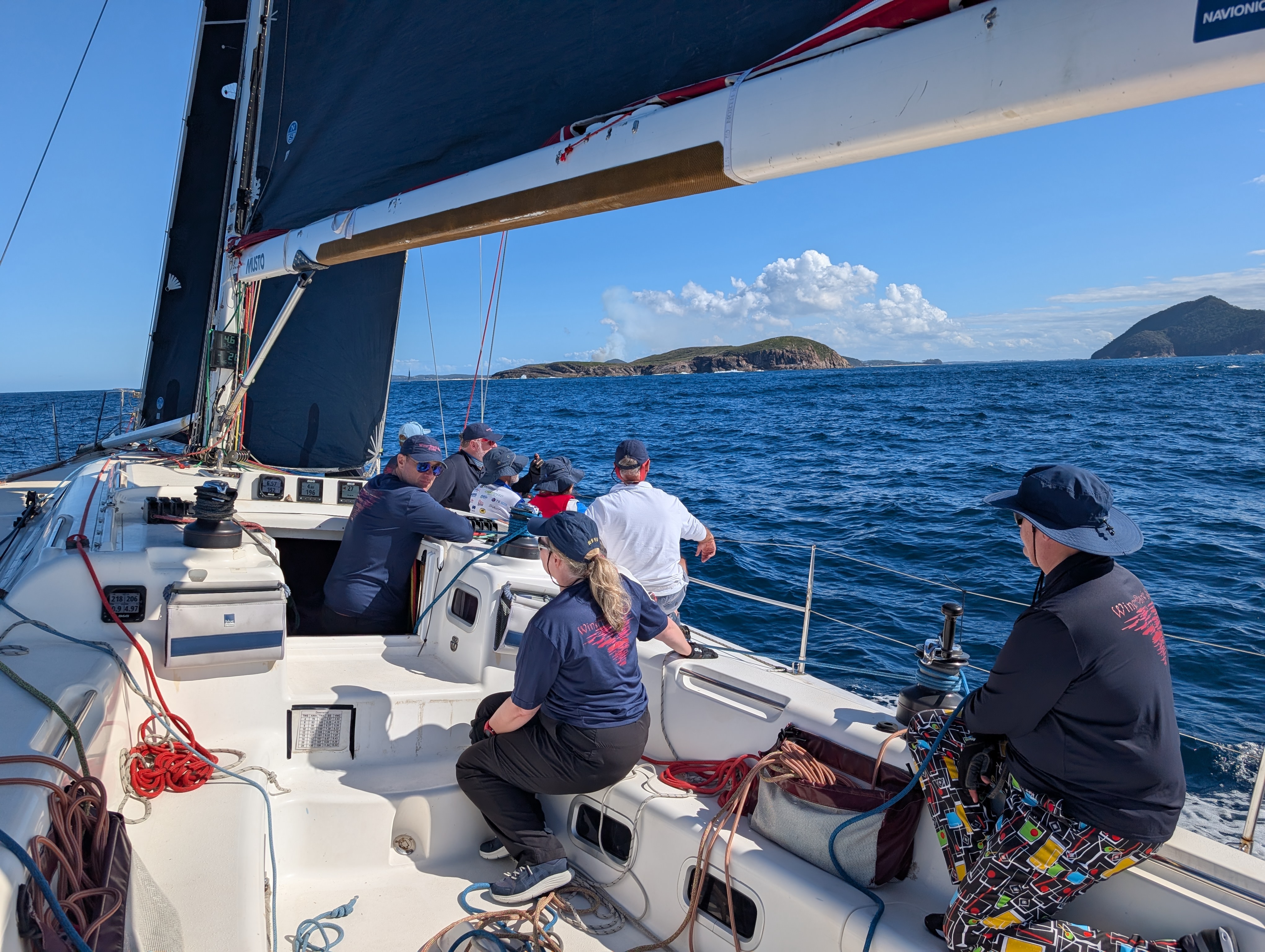
The light shifty wind and complex tidal patterns provided plenty of snake and ladders for the trip to the heads. Better wind was often countered by less current and none of the cruiser racers really liked the light air. The Port Stephens heads however had even more trick up its sleeves. As we approached the heads we watched the bigger boats coping 50 degree knocks. We had to decide do we follow them knowing the breeze would shift that way, or keep going in the wind we had. We chose the later and just kept the boat moving. Like everyone we did get becalmed for a while but we somehow managed to end up 100m to windward of our closest competitors, 51st Project (Bene First 50) and Daguet 2 (D2) (Mylius 50), and being pushed to the new breeze in the strongest current on the northern side of the channel.
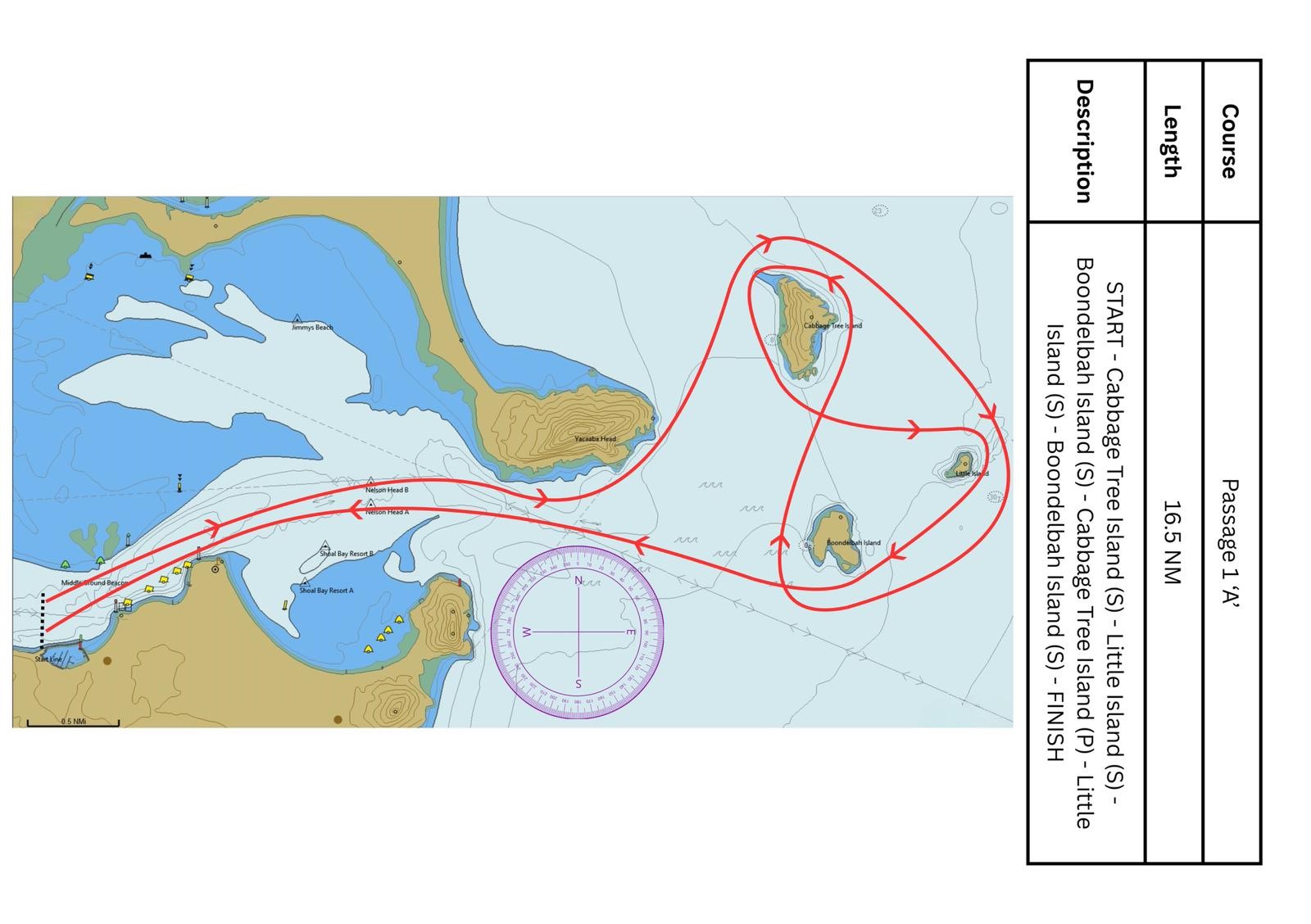
We then proceed to our dizzying rounding of the Islands. Cabbage to starboard, Little to Starboard, Boondelbah to starboard, Cabbage Trees to port, Little to Starboard and Boondelbah to starboard before heading back in to the finish line off Nelson Bay Marina. The snakes and ladders didn’t stop all day. Slow gains over and entire leg could be evaporated by a poor rounding or late hoist, the racing was that close.
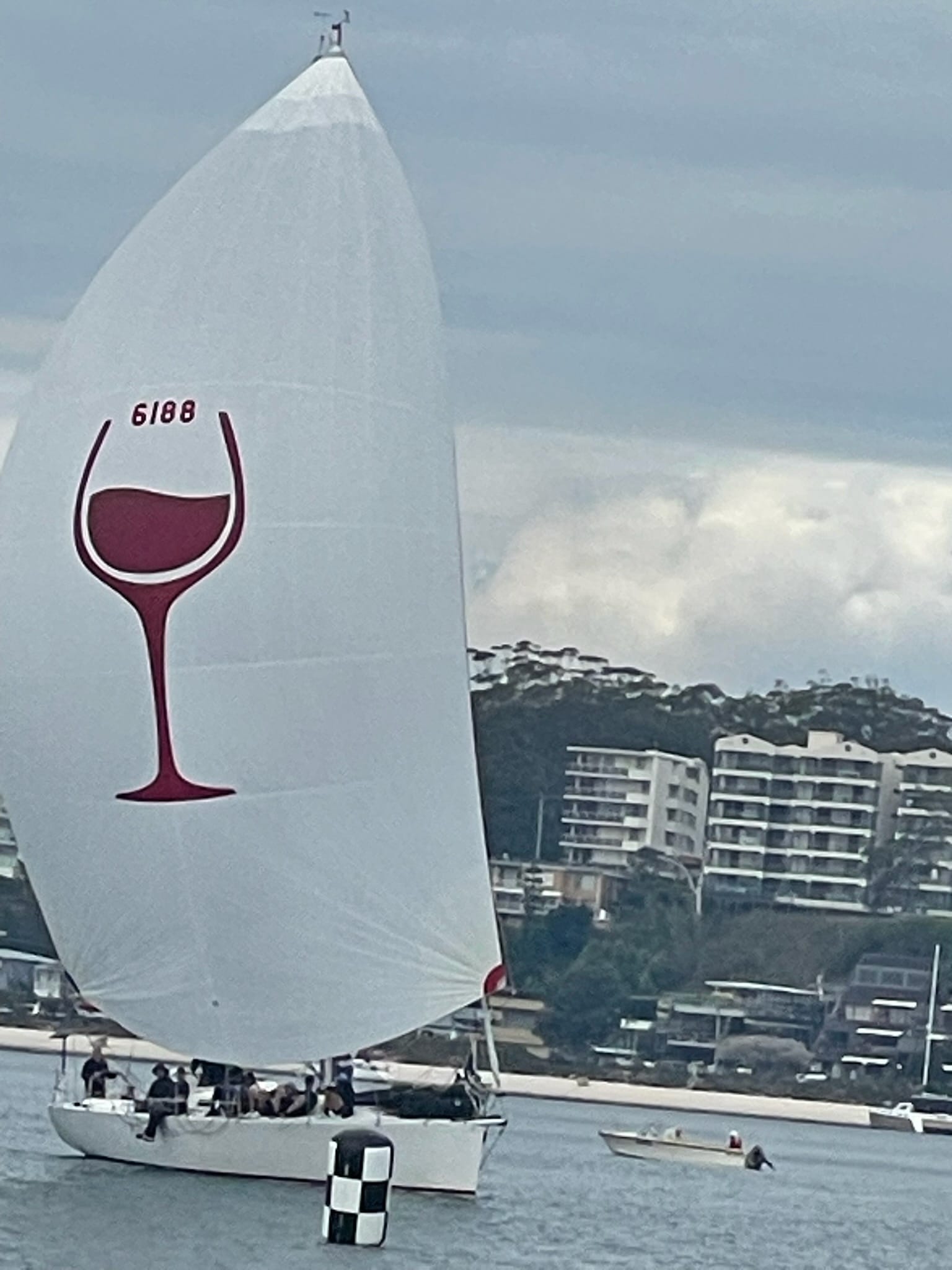
It turned out to be a day for the bigger boats, with the exception of D2 who got second. The results pretty much in handicap order. We ended up with a 6th on IRC and 6th on PHS.
Day 2
A little more wind was to everyone’s liking on Saturday. We had another great start on the pin end or port. It left us vulnerable to starboard tackers but gave us a longer starting tack and moving towards the better current. We followed our same tactics as day one at the heads with similar results. Marginally in front of D2 and a fair gap to 51st Project. We stuck with D2 until close to the windward mark set up near Broughton Island, exchanging crosses the whole way. Spinnakers were hoisted and we ran away to two marks set along the beachfront towards Hawks Nest. D2 started to pull away but we kept our gap on 51st Project. A tight reach from Hawks Nest back to the heads before a rapid fire hoist, gybe, tighten up and bear away. The leg from the head to the finish line suited Wine-Dark Sea more so than D2. It was as square as square could be. Thankfully there was just enough breeze to allow us to head down the 180 highway. Flirting with the sailing by the lee in every effort to avoid a gybe.
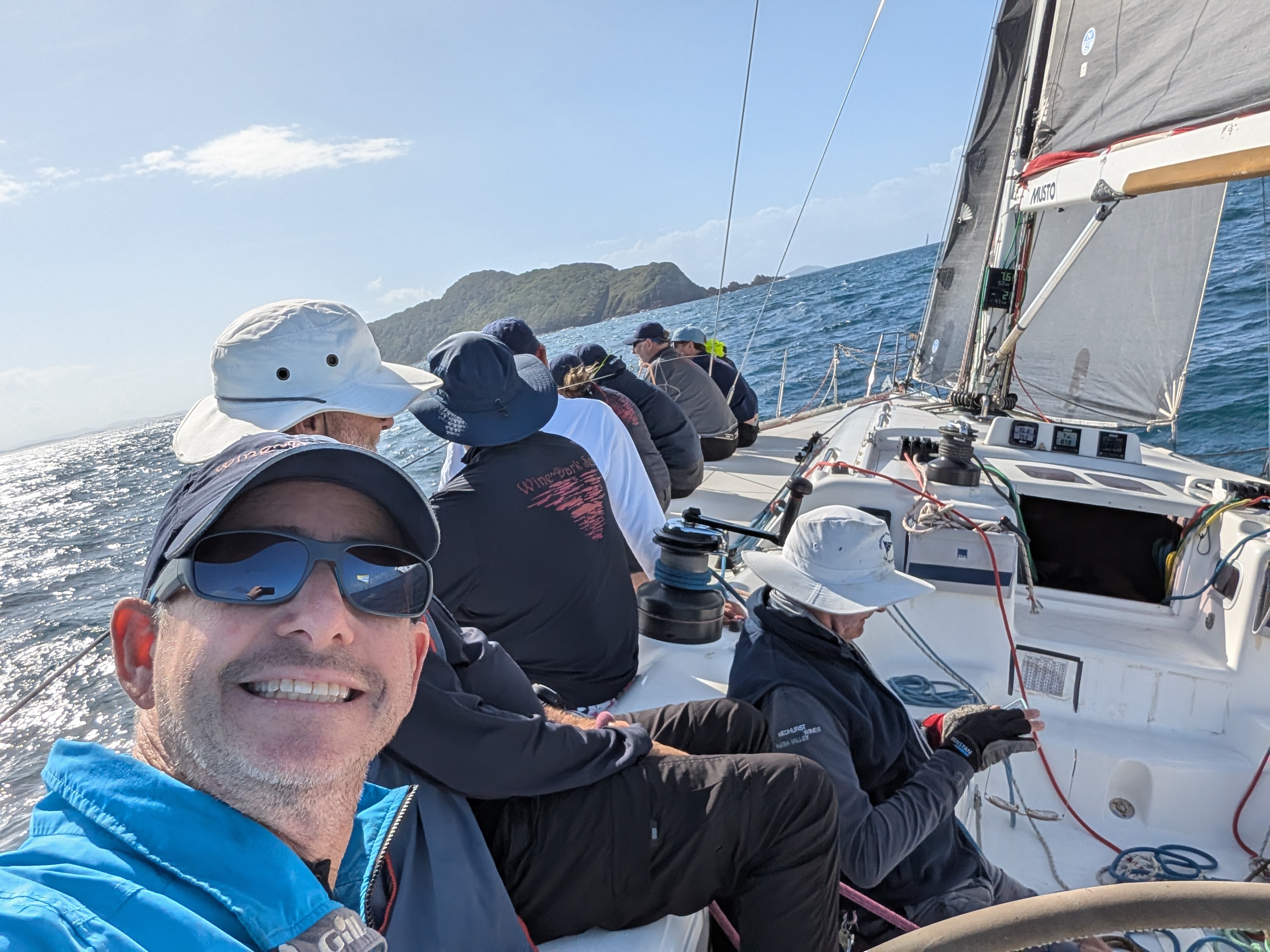
Whatever we did it worked. We kept the gap to D2 down to 6 minutes, across the line, and extended our lead to 51st Project to 11 minutes. Overall it was a resounding 9 minute win on PHS and 2nd on IRC behind a runaway Wild Oats X (sure is super, but a cruiser?!?)
Day 3
After the big win on PHS we thought the handicapper would sought out our result for the day in that pointscore. Having made gains with our start and first leg tactics we didn’t see the need to change too much there. The stronger breeze again played more into the hands of the beautiful Drumfire. Thankfully this pushed them into a fight with D2 allowing us to run our own race. This time the course was around Boondelbah Island and down to a rounding mark off Box Beach, a long upwind leg to Broughton Island before returning to round Boondelbah island for the run to the finish.
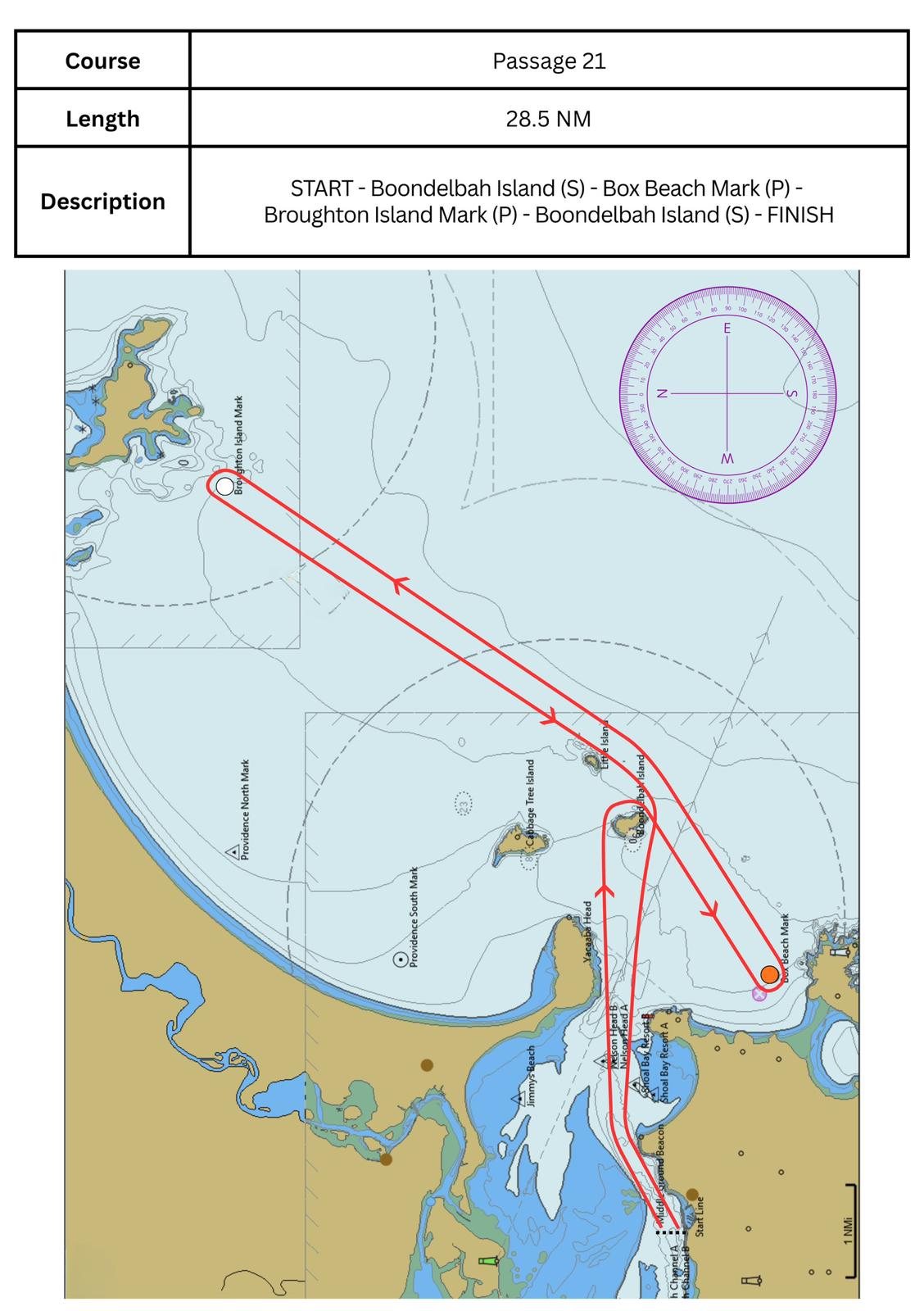
We were hot on the heels of the freshly powered up Drumfire and D2 on the first rounding of Boondelbah. The square leg in fresh pressure down to Box Beach once again played into Wine-Dark Sea’s hands. Her upwind performance was also on display having worked out the best way to sail through the two very different sea states of each tack. On the square leg back to Boondelbah we also figured out it was going to be quite a tight angle back into the heads with a building breeze and added pressure as the wind funnels into the heads. We decided to break out the Code 0, set inside the spinnaker, as we rounded the island. A quick blast in through the heads proved this to be the right choice with gusts of to the high 20’s that were dealt with by dumping the vang but would have been an unavoidable broach if we had left the spinnaker up. A quick change back to the spinnaker for the uber-square run to the finish kept the foredeck crew on their toes right to the end.
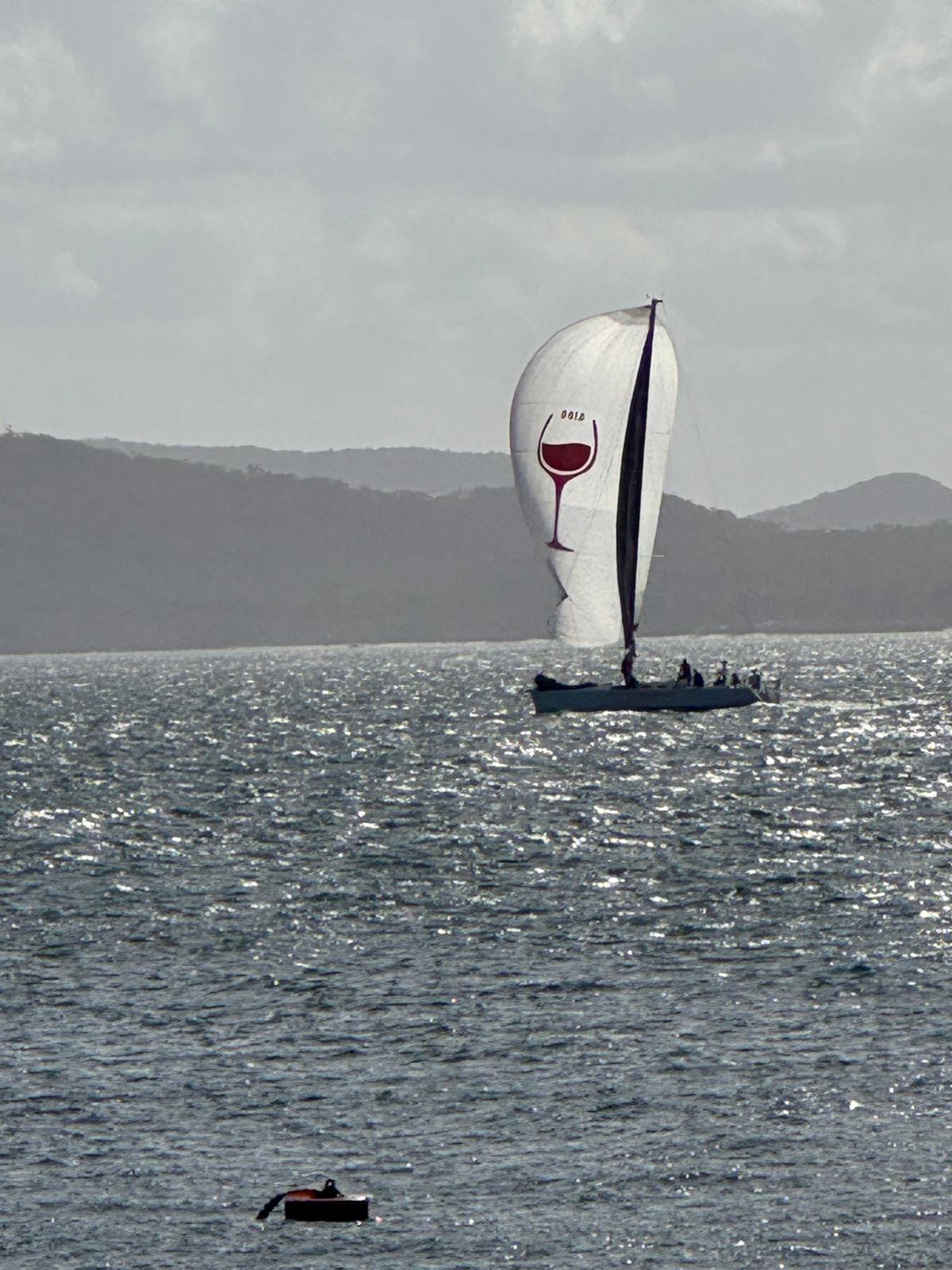
The scratch margins were closer again with D2 and Drumfire just 3 ½ minutes in front of us and 51st Project only 2 minutes behind, after using their local knowledge to cut the corner on the entry back into heads. The handicap results of the day of 2nd IRC and PHS capped out a brilliant weekend.
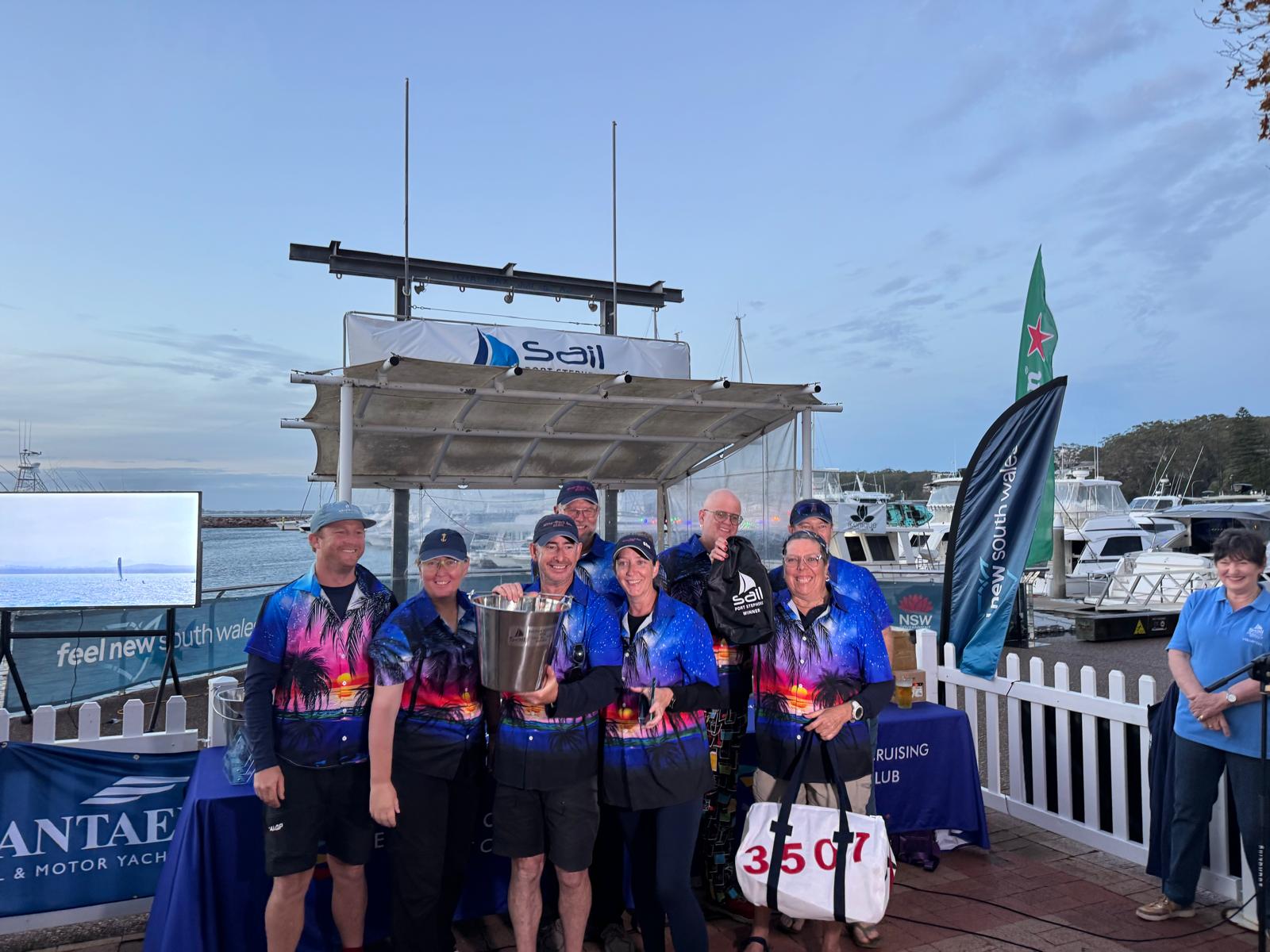
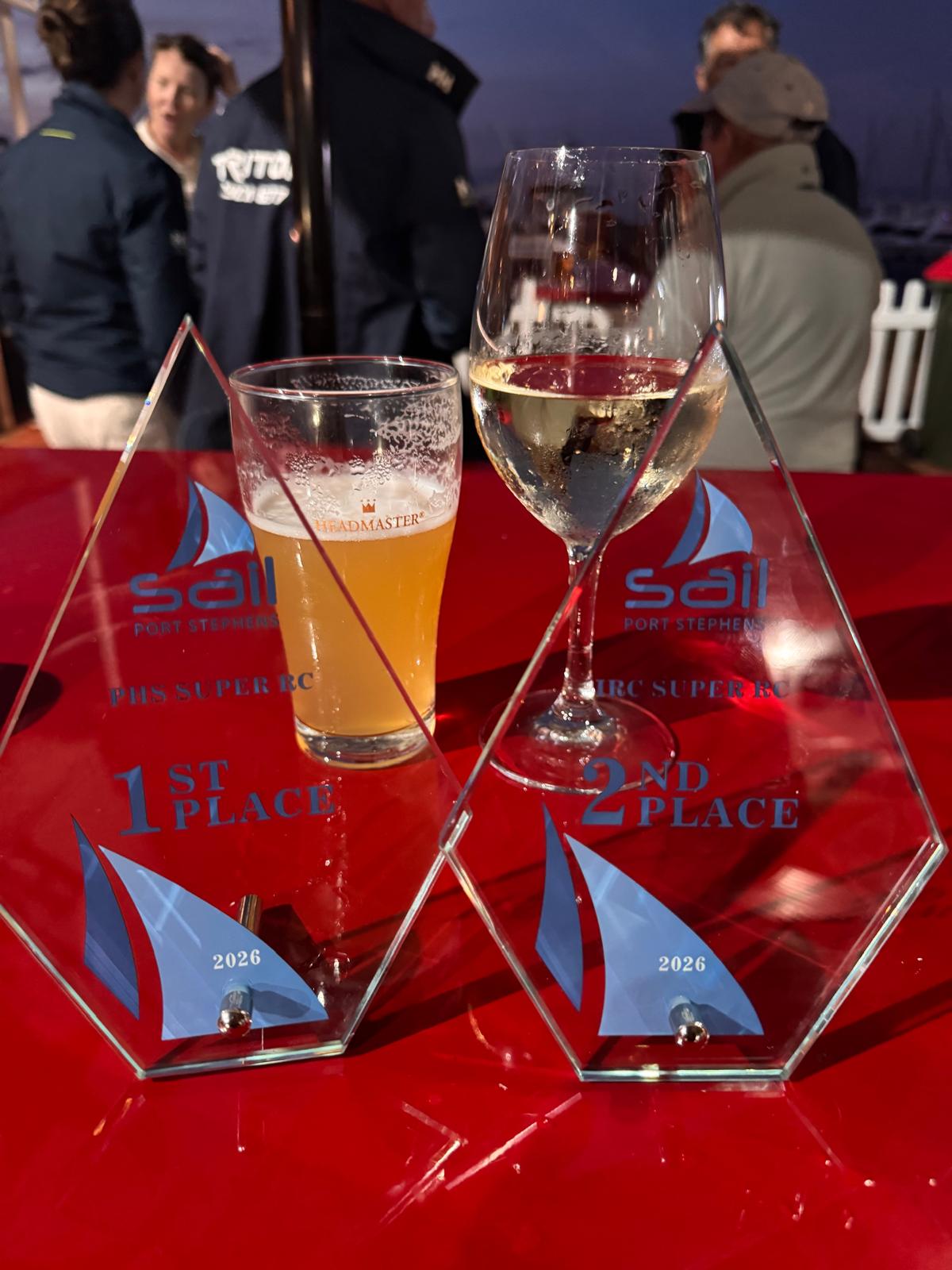
Overall we ended up winning PHS and coming 2nd to Wild Oats X in IRC. A fantastic result that puts Wine-Dark Sea in the spotlight as a leading contender in the Super Cruiser fleet.
The Crew
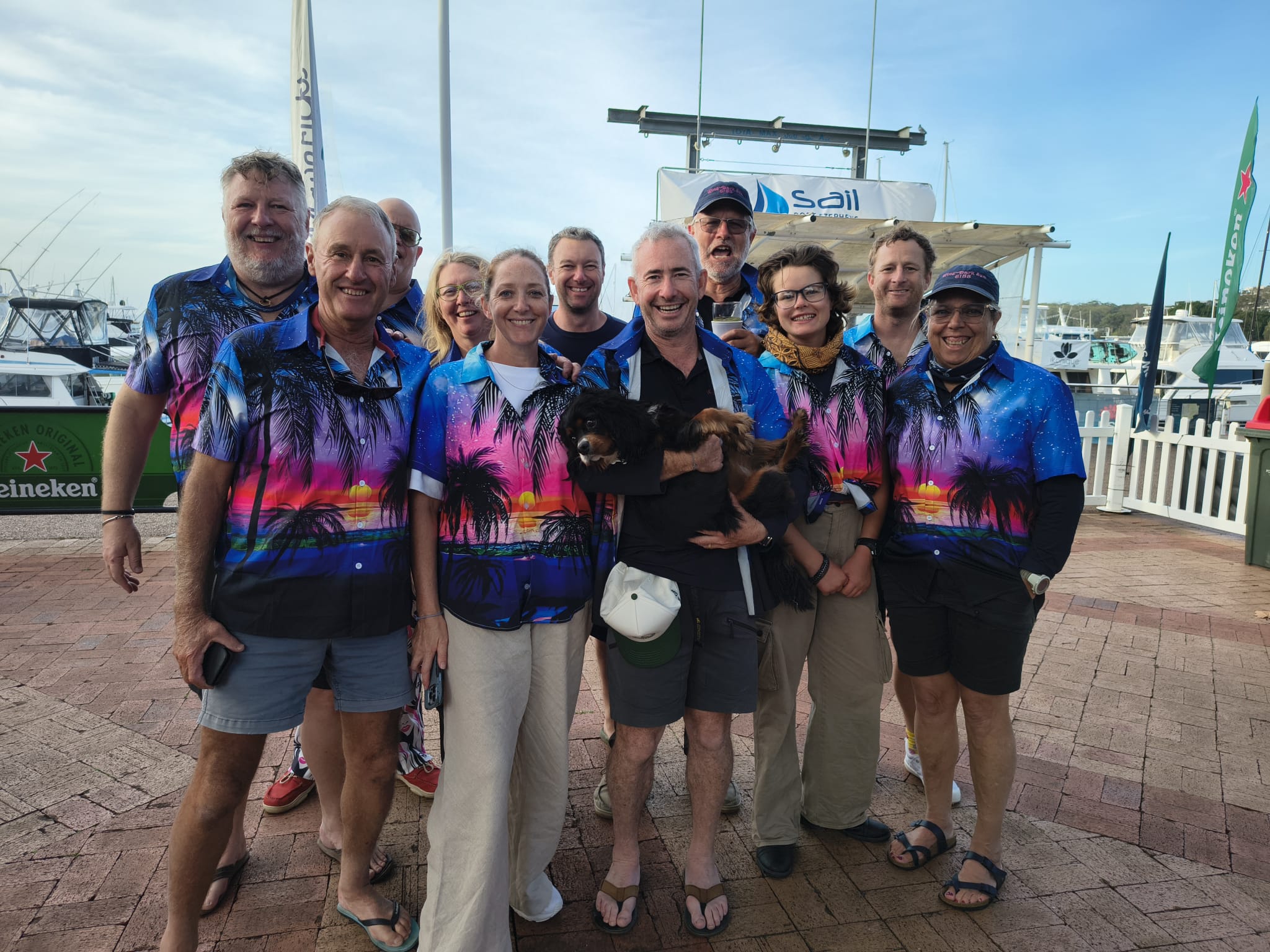
Thanks must go to the great crew we had for the weekend. This crew hadn’t all sailed together before, some, years apart, or on different boats. The core crew, of course, provided the steady hand of boat knowledge but were receptive to the expertise and experience of newer crew.
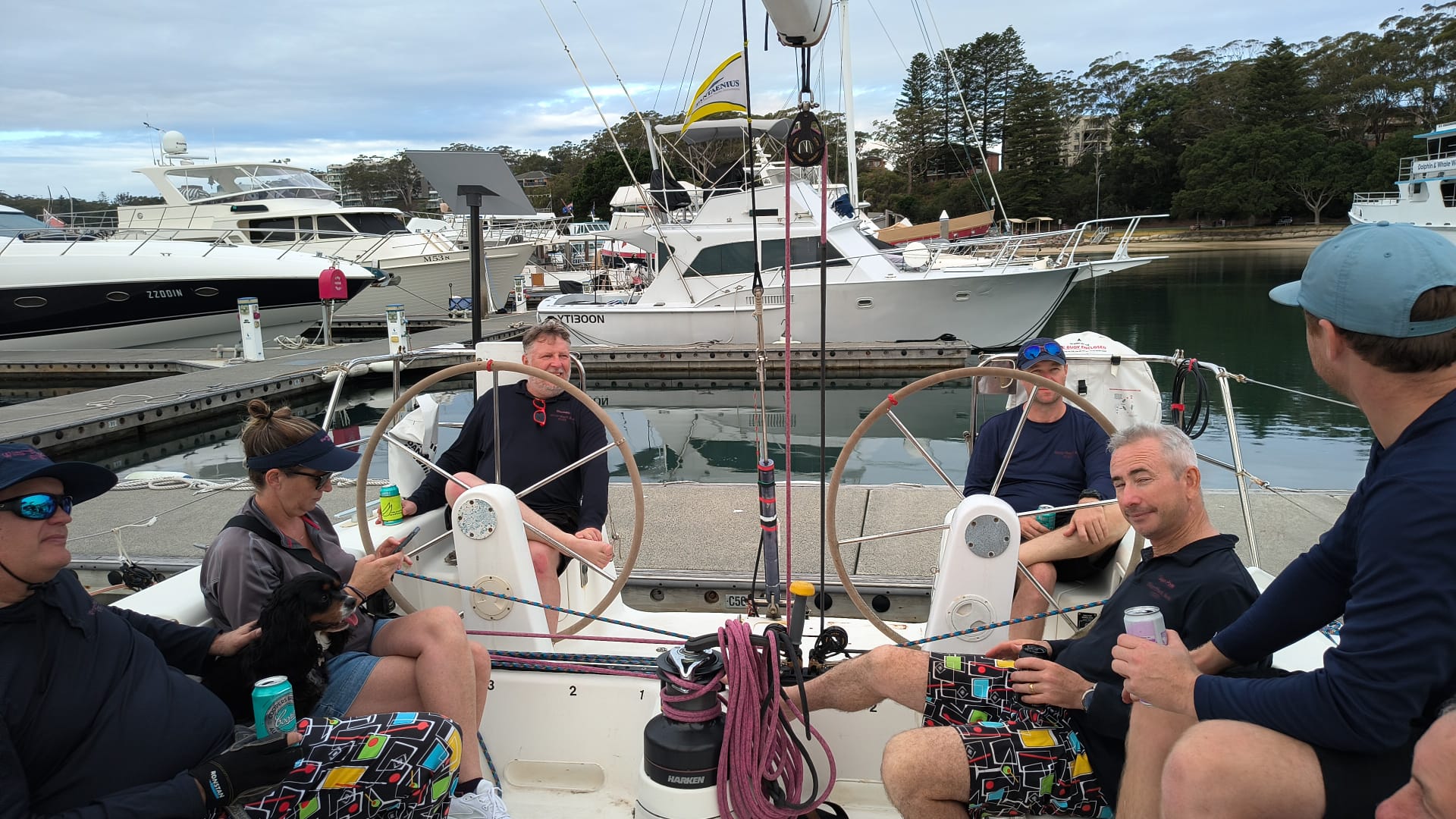
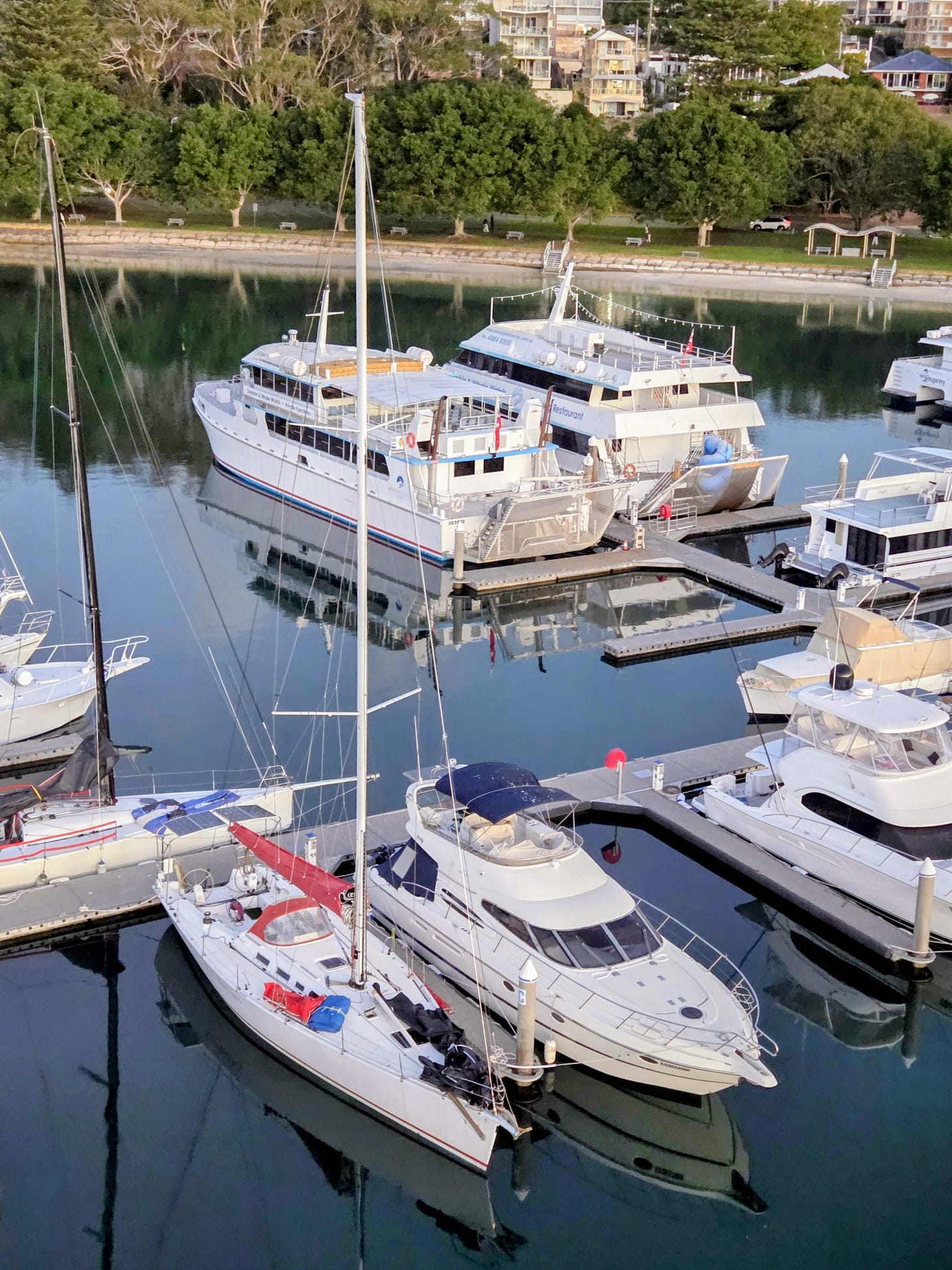
A special thanks to our Champagne Manager – Courtney Lowndes and team mascot Missy Lowndes. Not only did they deliver the boat to and from Port Stephens but kept us fed and watered during racing, well Courtney did. They were also a warm welcoming party after each day’s racing complete with endless kisses for the whole crew, well Missy did. Courtney also provided some of the shore based boat pictures.
Helm – Peter Lowndes
Champagne Manager – Courtney Lowndes
Mainsheet – Robert Speedy
Trim – Trent Goldsack
Trim – Saxon McGregor
Trim Assist – Jane McCulloch
Pit – Lindy Hardcastle
Mast – Doug Rayment
Mid Bow – Max Haymen
Bow – Trinity Woodley
Crew Boss – Richard Wulff
Wise man – Gerard Kesby
Team Mascot – Missy Lowndes